KEYNOTE SPEAKERS

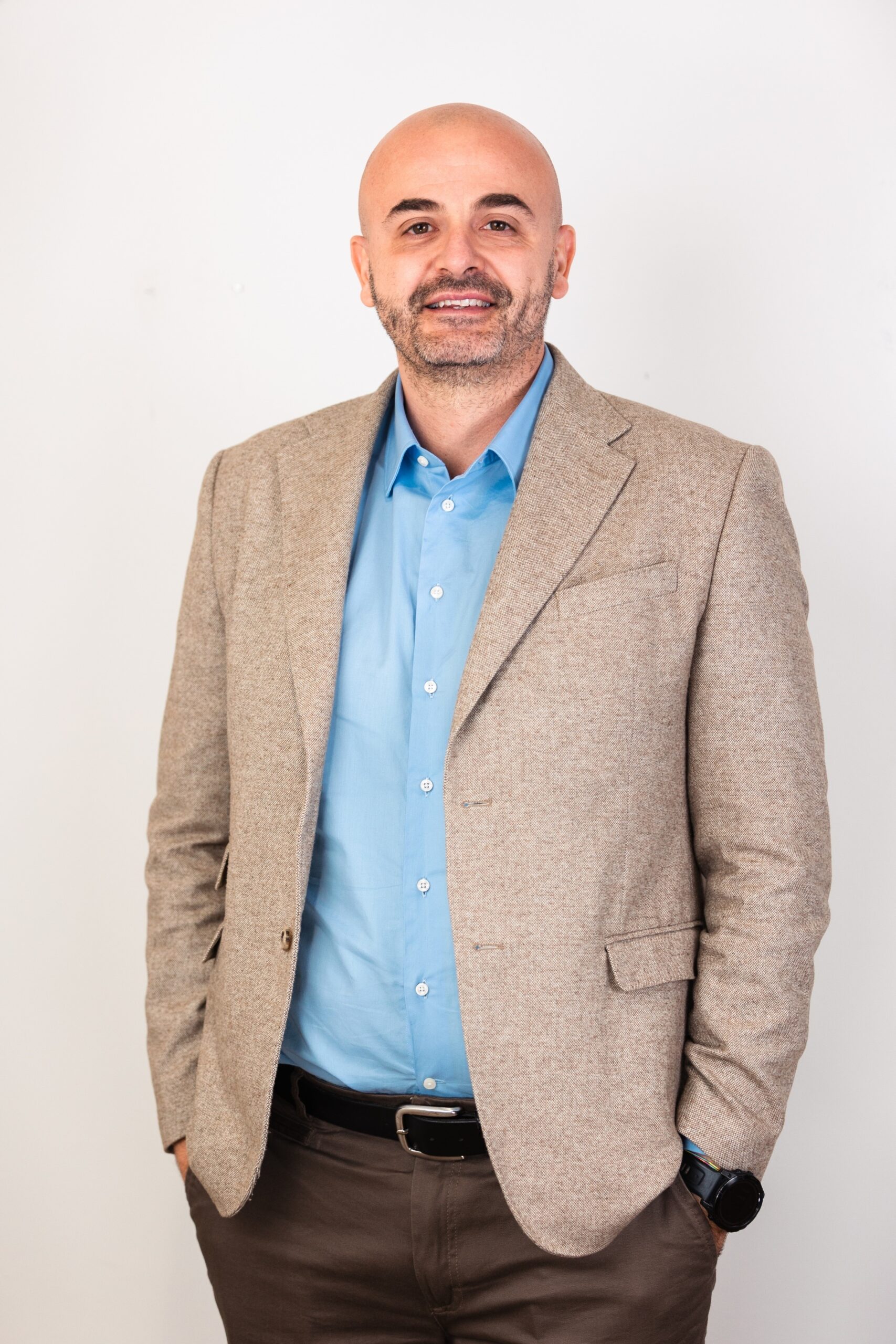
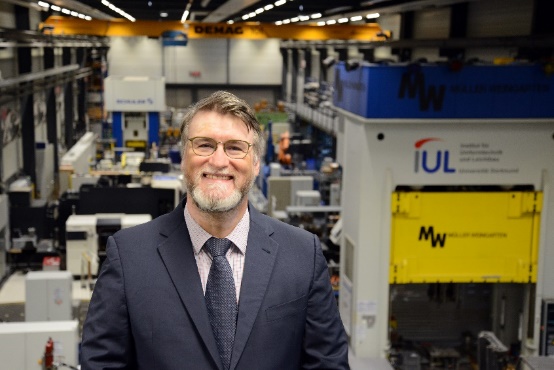
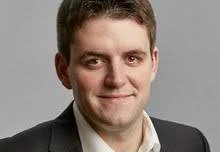
Yannis Korkolis
Yannis Korkolis

Professor of Mechanical Engineering, Head of the Institute of Forming Technology and Lightweight Components (IUL), TU Dortmund, Germany

Process innovation in aluminum hot extrusion: from proof-of-concept in the lab to enabling unique shapes in industrial production

Abstract

In Europe, 35% of aluminum products are manufactured by hot extrusion, making it one of the most common processes for lightweight production. In this talk, I will share a series of recent innovations developed at the Institute of Forming Technology and Lightweight Components (IUL) at TU Dortmund.

In continuous hot extrusion a constant profile exit velocity can be achieved, even while loading a billet, thus turning hot extrusion from a discrete to a continuous process. Two separated containers, with two individually-moving direct and indirect rams, are connected by a valve, enabling a controlled material flow. It has been shown experimentally and numerically that the concept is feasible, and that the welding properties of the charge weld can be increased by 39%. A rather complex metal flow pattern is seen in this process. By combining aluminum extrusion and polymer extrusion, continuous hybrid composite profiles can be manufactured. Extrusion typically takes place above 450 °C, where polymers burn. But here, the absence of oxygen allows exceeding the temperature limits of the polymer, and producing defect-free aluminum-polymer composites. Furthermore, by oscillating the polymer feed pressure, an axially-graded composite profile can be manufactured. In recent years, combinations of EN AW-6060 and PSU, HDPE and PA6 have been successfully extruded at IUL, both with uniform and axially-varying shapes.

Beyond these proof-of-concept investigations, research advances at IUL enable the industrial extrusion of otherwise impossible shapes, and the revalorization of scrap. In close collaboration with industrial partners, the influence of the die deflection and process parameters on the minimal wall thickness of hollow profiles has been analyzed. Combined with an inline process control system, this has enabled the commercial production of a thin-walled profile with wall thickness half of the current state-of-art. Recently, the microstructure and especially the grain size of an extrudate becomes of great interest also in industrial applications. Together with the Fraunhofer IWM and a consortium of several extruding companies, a mean-field modelling approach is being developed to predict the grain size and recrystallization of EN AW-6060 and 6082 extrudates. The validation on an industrial profile demonstrated the capabilities and limits of the methodology. Finally, in the direct recycling process (aka chip extrusion), compacted chip-based billets are directly extruded to profiles, or even sheets. The resulting mechanical properties are similar to profiles from cast billets, while the chip-based sheets have formability comparable to the rolled material. By chip extrusion, remelting of scrap is avoided, saving the approx. 20% of the melt that is lost to oxidation/slag. Furthermore, the required energy consumption can be halved and the greenhouse gasses reduced by 2/3, over the remelting route.

With these and similar innovations in established forming processes, like hot extrusion of aluminum, the next generation of products can be imagined and realized today, while enhancing the productivity and helping protect the environment.

Biography

Yannis P. Korkolis received his Dipl-Ing. (1998) in Mechanical Engineering and M.Sc (2002) in Computational Mechanics degrees from the National Technical University of Athens, Greece. He obtained a PhD (2009) in Engineering Mechanics from the University of Texas at Austin, USA. Since 2009 he was an Assistant (2009-2015) and then tenured Associate (2015-2018) Professor at the University of New Hampshire, and then a tenured Associate Professor (2019-2023) at the Ohio State University. He joined the Technical University Dortmund, Germany in November, 2023, where he is currently the Professor and Head of Institute of Forming Technologies and Lightweighting (IUL). He is the Spokesperson of Transregio 188 “Damage-controlled forming processes”. He has co-authored over 280 publications, including over 170 peer-reviewed ones. Among other accolades, he has received the early-career investigator award (CAREER) from the US National Science Foundation, the Ralph Teetor Award from the US Society of Automotive Engineers and was the main organizer of the 13th Edition of the NUMIFORM Conference in 2019, one of the leading global conferences in bulk and sheet metal forming processes
Benjamin Klusemann
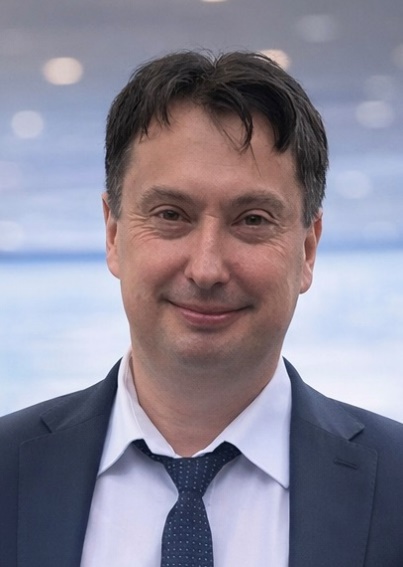
Benjamin Klusemann

Professor of Materials Mechanics, Leuphana University Lüneburg; Helmholtz-Zentrum Hereon, Germany

Solid State Material Processing via Friction extrusion

Abstract

Solid-state processing offers unique opportunities in producing materials and parts, as difficulties arising in conventional melting routes can be avoided. In this regard, friction extrusion has gained considerable attention in the past decade as an energy-efficient alternative to conventional processing methods. By utilizing the intrinsic frictional heating generated through the relative rotational motion between the die and feedstock, friction extrusion eliminates the need for external heat sources and pre-heating, making it a promising candidate for recycling and upcycling as well as achieving mechanical alloying. Different types of feedstock materials, such as billet, chips and powder of a variety of Al-, Mg- and Cu-alloys, as well as various extrudates, including wires, rods and tubes have made friction extrusion intriguing to researchers and industry. The combination of severe plastic deformation coupled with the elevated temperature exposure during friction extrusion initiates dynamic recrystallization, resulting in a refined microstructure. The refined microstructure offers the capability to achieve high strength while maintaining ductility.

In this work, an overview on recent advances in friction extrusion and consolidation of different metallic materials from different feedstock, in particular Al powder and scrap, will be provided. Additionally, details on the microstructure evolution during the thermo-mechanical processing will be discussed. For this purpose, a novel in-situ set-up for friction extrusion is presented, which has been employed at a high-energy synchrotron beamline. The resulting insights, in particular in the precipitation kinetics during friction extrusion will be revealed. The experimental investigations are supported by numerical simulations, based on a GPU-accelerated smoothed particle hydrodynamics formulation, allowing detailed insight into thermo-mechanical conditions during processing.

Biography

Benjamin Klusemann is Professor of Materials Mechanics at the Leuphana University Lüneburg since 2015. Additionally, he is head of the department “Solid State Materials Processing” at the Helmholtz-Zentrum Hereon within the Institute of Material and Process Design. After his diploma in Mechanical Engineering and the Dr.-Ing. in Mechanics at the TU Dortmund in 2010, he moved for two years to RWTH Aachen before he joined TU Hamburg. With a Feodor Lynen Research Fellowship of the Humboldt foundation, he spent 9 months at the California Institute of Technology, USA in 2013. His research interests include various topics in the field of solid-state materials processing, micromechanics and multi-scale modelling, crystal plasticity, technological process simulations and experimental-modelling correlations.

Marcin Hojny
Marcin Hojny

AGH University of Krakow, Poland

How Industry 4.0/5.0 Redefines the Engineer’s Responsibility

Abstract

Industry 5.0 is the next era of industrial transformation, which goes beyond the existing assumptions of Industry 4.0. The key difference between these two approaches concerns the role of humans in the production process. While Industry 4.0 focuses on automation, digitization, and machine integration, Industry 5.0 restores humans to a central role, emphasizing collaboration between people and technology. This change significantly redefines the role and responsibility of engineers, who are no longer just designers of machines or algorithms, and becomes an architect of complex cyber-physical systems in which sensors, real-time simulation models, artificial intelligence algorithms, decision-making systems, advanced interfaces in virtual/augmented reality technology, and above all, people coexist. The lecture will present examples of industrial implementations of systems declared as Industry 4.0/5.0 solutions, which ended at the level of monitoring systems and advanced data visualization, as well as examples of systems that have achieved a level of partial decision-making autonomy. Particular emphasis will be placed on the evolution of classic monitoring and support systems towards autonomous (or partially autonomous) systems, where the engineer's responsibility undergoes a fundamental change. In this aspect, the formal definition of autonomy levels, the architecture of the decision loop taking into account human supervision (human-in-the-loop and human-on-the-loop approaches), the procedures for verification and validation of digital twin operational components (e.g., real-time computing systems), and the approach to risk management in operational (industrial) conditions. The lecture is an attempt to take an engineering and practical look at the problems in the era of increasing system autonomy, and at the same time, it is an invitation to discuss how to design and implement systems based on Industry 4.0/5.0 technologies in an effective and realistic way.

Biography

Prof. Marcin Hojny is an academic and teaching staff member at AGH University of Krakow, Faculty of Metals Engineering and Industrial Computer Science, Department of Applied Computer Science and Modelling. Since 2021, he has been the leader of the Virtual Manufacturing research group. His research interests focus on Industry 4.0/5.0 technologies and computational engineering, with particular emphasis on modelling and simulation of processes under high temperatures, high strain rates, and large deformations. He is a practitioner in the design, implementation, and deployment of dedicated computational tools for industry, supporting technological process optimization and decision-making. His scientific output includes 75 publications, among them 30 JCR-indexed articles and 3 books. He has actively participated in more than 26 R&D projects.

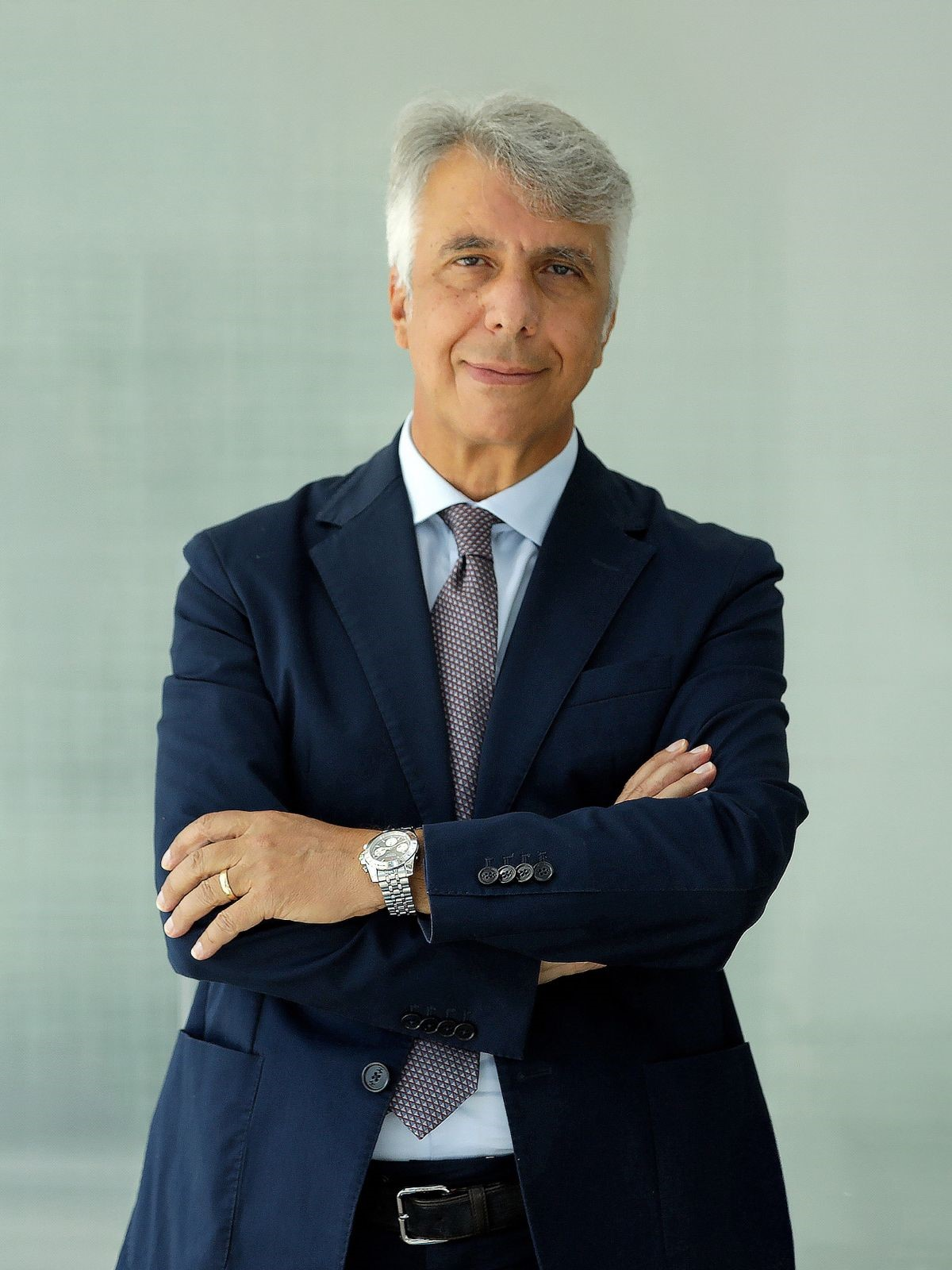
Paolo Calefati
Paolo Calefati

CEO, AltForm srl (Sodick Group), Italy

Multi-laser PBF platforms, wire- and powder-based DED systems

Abstract

AltForm is an Italian company specialized in advanced laser solutions for the manufacturing industry. Now part of the Japanese Sodick Group, the company develops and produces metal Additive Manufacturing systems based on Powder Bed Fusion (PBF) and Direct Energy Deposition (DED) technologies. In addition to AM, it also offers laser-based solutions for remote welding and surface treatments such as laser hardening.

Its products are designed for industrial applications and can be integrated into fully automated production lines. All systems are open-parameter and allow complete control over process variables, enabling flexibility in material selection and production optimization. The company’s offering includes multi-laser PBF platforms, wire- and powder-based DED systems, and robotic cells developed for high-throughput additive manufacturing, coating, and repair.

With a strong focus on automation, customization, and scalability, Prima Additive by Sodick serves key sectors such as aerospace, automotive, energy, defense, and medical, and continues to expand its global presence.

Biography

Paolo Calefati is the CEO of AltForm srl. He co-founded the company in 2015 as part of Prima Industrie and led its growth into a key player in laser-based metal AM, now integrated within the Sodick Group. Previously, he served as Vice President of Innovation at Prima Industrie, where he focused on advanced manufacturing technologies and strategic R&D partnerships.

With a background in engineering, artificial intelligence, and photonics, Paolo began his career in research before earning an MBA from the University of Turin. He has coordinated several European innovation projects and collaborates with universities and industry networks across Europe.

He is or has been actively involved in various international working groups such as Photonics21, AMEF, and the EIT Manufacturing Supervisory Board, promoting smart and sustainable manufacturing across Europe.

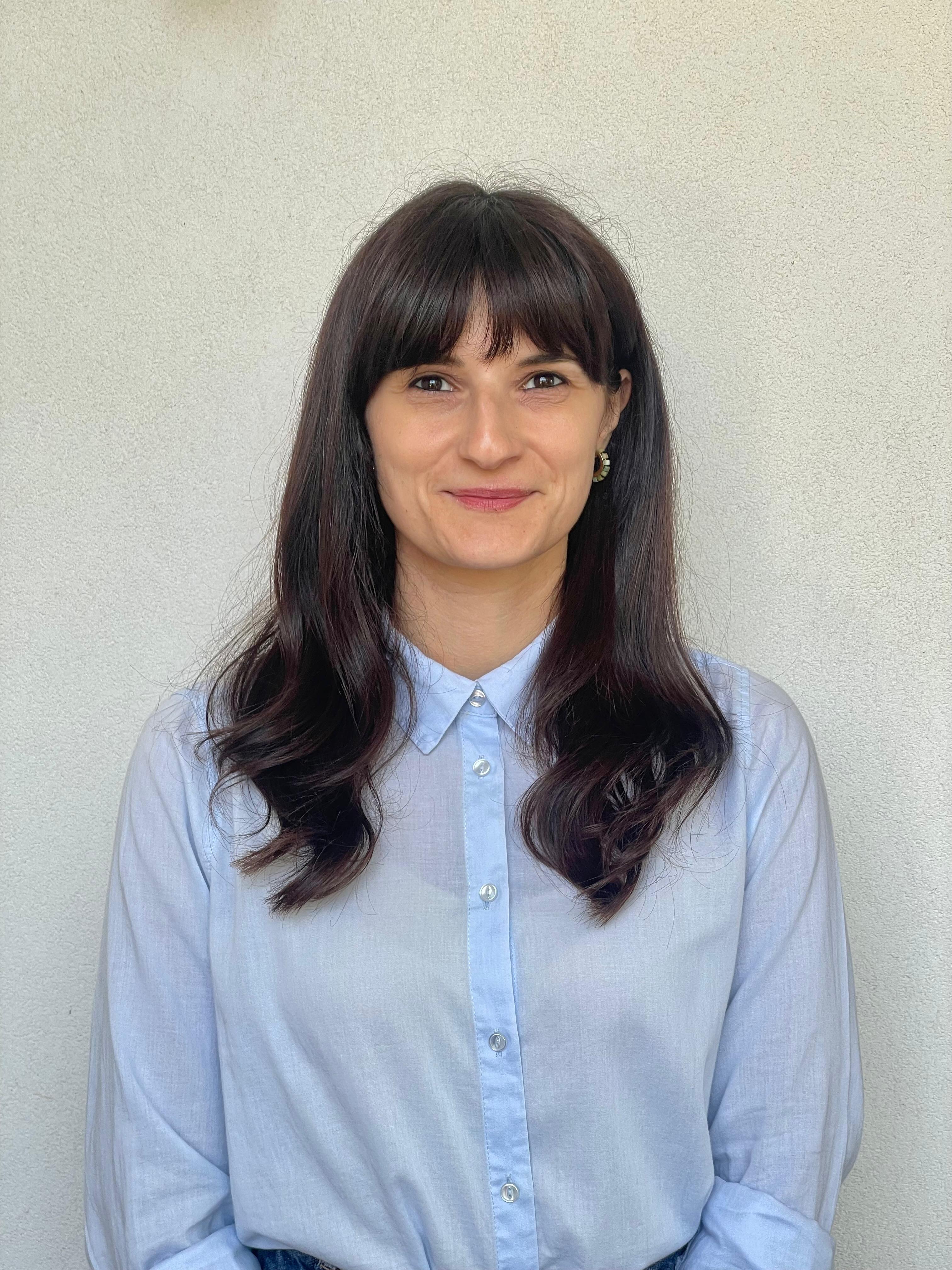
Iole Marchese
Iole Marchese

OMER S.p.A. – FEA Analyst and Sheet Metal Forming Engineer

Forming technologies for Aluminium railway interiors: criteria definition and case study validation

Abstract

The use of aluminium in railway interior components is gaining increasing attention due to its high recyclability, compliance with fire and smoke requirements, and high strength-to-weight ratio. Despite these advantages, the limited cold formability of aluminium alloys represents a significant challenge when manufacturing components characterized by complex geometries and demanding aesthetic requirements, such as interior panels. To overcome these limits, different forming technologies have been investigated and industrially implemented over the years, including cold forming, warm forming and localized heat-treated forming processes. The selection of the most suitable technology is a critical step, as it strongly affects component quality, process feasibility, production costs and industrialization time. This work presents an overview of the industrial forming technologies adopted for the manufacturing of aluminium railway interiors and describes the evaluation criteria used for technology selection. Focus is placed on family of window panels, for which extensive experimental and numerical investigations enabled the definition of a preliminary decision-making approach based on a Forming Severity Index (FSI). The proposed index correlates the geometric characteristics of the component with the severity of the required deformation, providing an initial indication of the most suitable forming technology. The preliminary technology assessment based on the FSI is subsequently complemented by detailed process design activities supported by numerical simulations and validation trials. This integrated approach allows the identification of robust manufacturing solutions and ensures the production of defect-free components compliant with the required dimensional and quality specifications.

Biography

FEA Analyst and Sheet Metal Forming Engineer at O.Me.R. S.p.A. Graduated in Mechanical Engineering from the Polytechnic University of Bari, she developed her interest in metal forming processes through her thesis work on improving the formability of a railway window panel by means of localized heat treatment. At O.Me.R., she is involved in the development and optimization of warm and cold sheet metal forming processes for railway interior components, supporting feasibility studies, process design, tooling development, and prototype validation through finite element simulations. Her interests include advanced forming technologies and innovative approaches to enhancing sheet metal formability, including localized heat treatment techniques. She has also contributed to seminars and collaborative activities with universities, promoting knowledge exchange between industry and academia.

Giuseppe Russello
Giuseppe Russello

OMER S.p.A. – Chairman and Chief Executive Officer

Forming technologies for Aluminium railway interiors: criteria definition and case study validation

Biography

Giuseppe Russello is the Chairman and Chief Executive Officer of OMER S.p.A., a company listed on Euronext Growth Milan and internationally active in the design and manufacture of highly engineered components and systems for the railway industry. A mechanical engineer who graduated from the University of Palermo, he is among the founding shareholders of OMER, established in 1990 and steadily grown into a leading industrial partner for some of the world's major manufacturers of high-speed, regional, and metro trains.

Under his leadership, the company has embarked on a path of industrial and technological growth that has transformed OMER from a local manufacturing business into an industrial group with a strong international presence. A key milestone in this journey was the company's listing on Euronext Growth Milan, which marked its entry into the financial markets and significantly strengthened the Group's investment capacity and growth potential.

Among the most significant industrial initiatives promoted in recent years is the redevelopment and revitalization of the historic railway manufacturing site in Carini, near Palermo, where railway coaches were once produced. The site was acquired and completely refurbished through a major industrial and technological investment program, restoring its original manufacturing vocation. Today, it is a modern production hub dedicated to the manufacture of structural components for rolling stock.

At the same time, OMER has strengthened its international expansion strategy through the establishment of a manufacturing facility in Sterling Heights, in the Detroit metropolitan area, one of North America's leading manufacturing hubs, further consolidating its presence in global railway markets.

Alongside his entrepreneurial activities, Giuseppe Russello has played an active role in industrial representation, serving as President of Sicindustria Palermo, where he contributed to the development of the local industrial ecosystem and promoted policies aimed at enhancing the growth and competitiveness of the regional manufacturing sector.

He has also consistently emphasized the importance of the relationship between industry, education, and younger generations. In this context, OMER sponsors the annual The Value of Knowledge Award, an initiative that recognizes the children of company employees who have distinguished themselves through outstanding academic achievements, highlighting the fundamental role of education and skills in fostering both personal and industrial development.

In 2022, Giuseppe Russello was awarded the title of Cavaliere del Lavoro (Knight of Labour) by the President of the Italian Republic in recognition of his contribution to the development of Italian industry